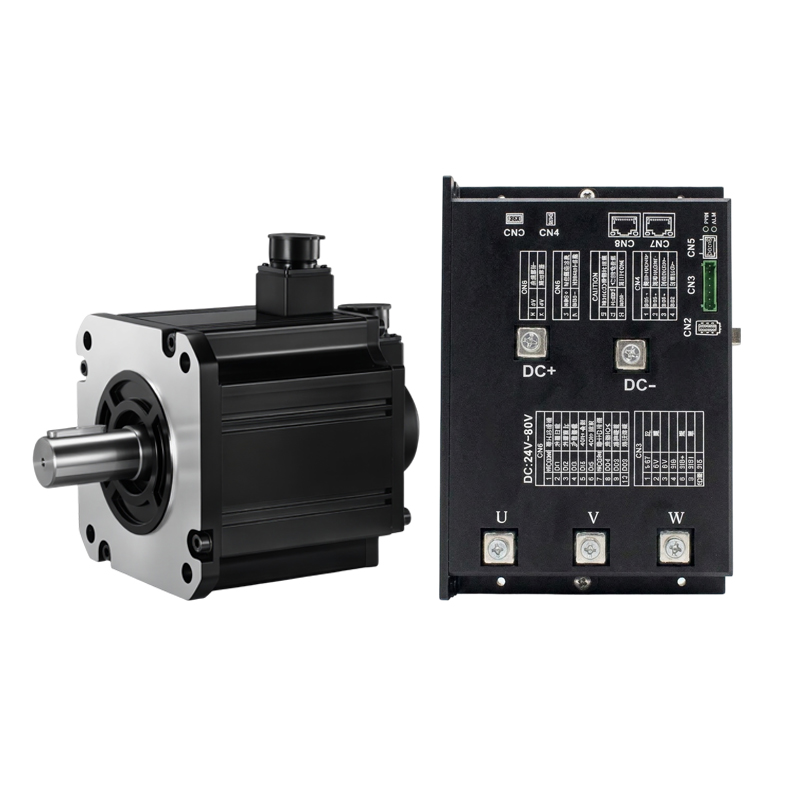
A DC motor is an electrical device that converts direct current (DC) electrical energy into mechanical rotational energy. It is widely used in industrial automation, robotics, electric vehicles, power tools, medical equipment, and many other applications. A typical DC motor consists of several key components, including the stator, rotor (armature), commutator, brushes, and housing.
The stator of a DC motor is the stationary part that creates the magnetic field required for motor operation. Unlike the rotor, which rotates to generate mechanical output, the stator remains fixed and provides a stable magnetic environment for interaction with the armature. The performance, efficiency, and torque characteristics of a DC motor are strongly influenced by the design and quality of its stator.
Structure And Main Components Of A DC Motor Stator
The structure of a DC motor stator varies depending on the motor type, power rating, and application requirements. However, most stators contain several common components.
1. Stator Core
The stator core is usually made from laminated electrical steel sheets. These laminations are designed to reduce eddy current losses, which helps improve motor efficiency and reduce heat generation.
The main functions of the stator core include:
Providing a low-reluctance path for magnetic flux
Supporting the field windings or permanent magnets
Improving magnetic field distribution
Enhancing overall motor efficiency
High-quality stator cores are essential for motors that require continuous operation and high reliability.
2. Field Windings
In traditional DC motors, the stator generates a magnetic field through field windings. These copper coils are installed around the stator core and create an electromagnetic field when current passes through them.
The strength of the magnetic field depends on factors such as:
By controlling the field winding current, engineers can adjust the motor’s speed and torque performance.
3. Permanent Magnets
Some modern DC motors use permanent magnets instead of electromagnetic field windings. These motors are known as permanent magnet DC motors (PMDC motors).
Permanent magnet stators offer several advantages:
Common magnet materials include ferrite magnets and rare-earth magnets such as neodymium magnets.
4. Motor Housing
The motor housing surrounds and protects the stator assembly. It also provides mechanical support and helps dissipate heat generated during operation.
A well-designed housing can improve:
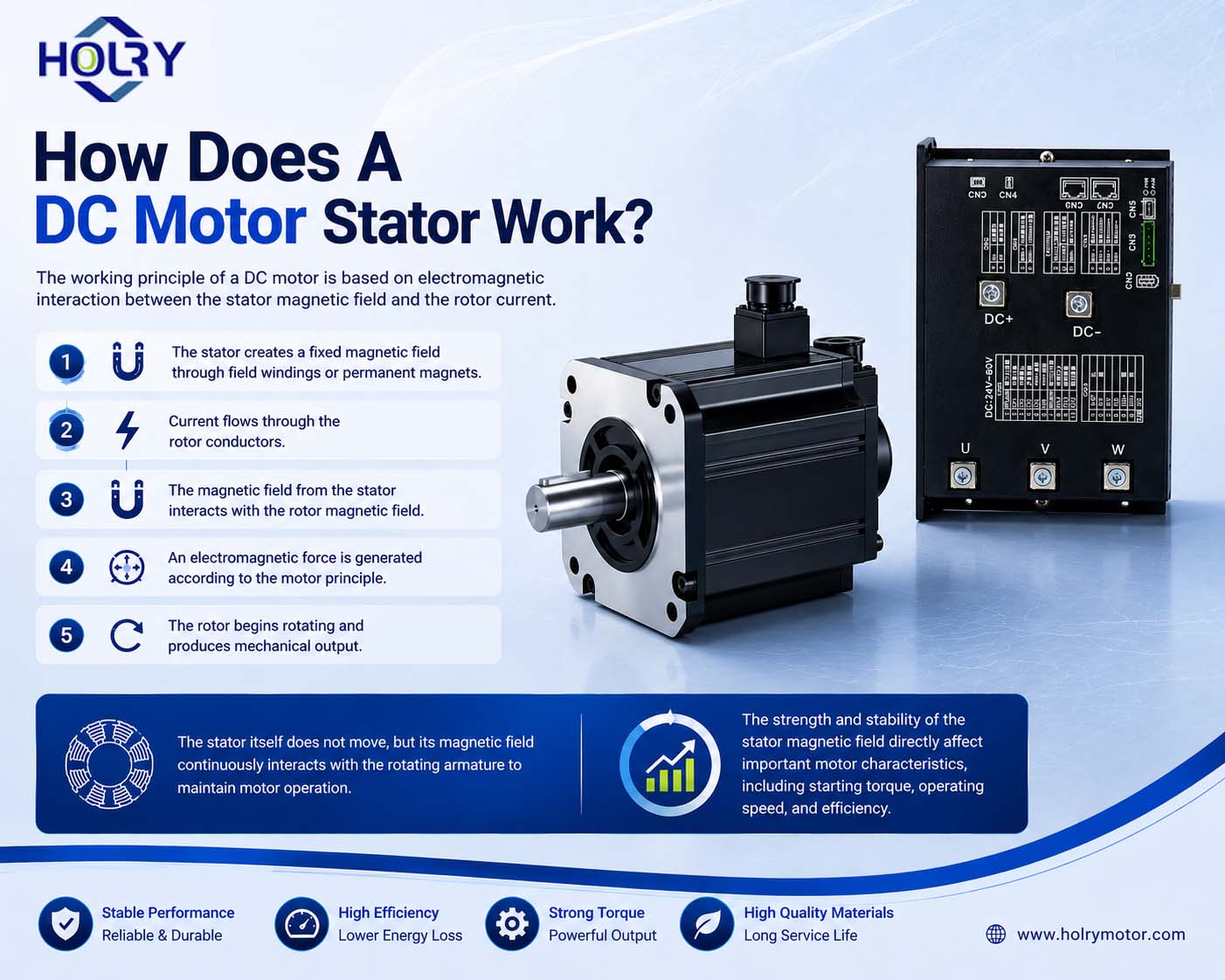
How Does A DC Motor Stator Work?
The working principle of a DC motor is based on electromagnetic interaction between the stator magnetic field and the rotor current.
When DC power is supplied to the motor:
The stator creates a fixed magnetic field through field windings or permanent magnets.
Current flows through the rotor conductors.
The magnetic field from the stator interacts with the rotor magnetic field.
An electromagnetic force is generated according to the motor principle.
The rotor begins rotating and produces mechanical output.
The stator itself does not move, but its magnetic field continuously interacts with the rotating armature to maintain motor operation.
The strength and stability of the stator magnetic field directly affect important motor characteristics, including starting torque, operating speed, and efficiency.
Types Of DC Motor Stators
Different DC motor designs use different types of stator structures according to performance requirements.
1. Wound Field Stator
A wound field stator uses copper coils to generate the magnetic field. It is commonly found in high-power DC motors used in industrial applications.
Advantages include:
2. Permanent Magnet Stator
Permanent magnet stators use fixed magnets to create the magnetic field. They are commonly used in small DC motors.
Advantages include:
Simple construction
High efficiency
Lightweight design
Low maintenance
3. Brushless DC Motor Stator
Although brushless DC motors (BLDC motors) have a different structure from traditional brushed DC motors, their stator plays a crucial role. In BLDC motors, the stator contains multiple-phase windings that generate a rotating magnetic field.
The stator works together with electronic controllers to achieve:
Precise speed control
High efficiency
Low noise operation
Longer service life
Importance Of Stator Design In DC Motors
The stator design has a significant impact on the overall performance of a DC motor. A properly designed stator can improve efficiency, reliability, and operating stability.
Key design factors include:
Magnetic Circuit Design
A good magnetic circuit reduces energy losses and ensures effective magnetic flux distribution. Poor magnetic design can lead to lower torque output and increased heat generation.
Material Selection
High-quality electrical steel and advanced magnetic materials help reduce losses and improve motor efficiency.
Thermal Management
Since motors generate heat during operation, effective heat dissipation is essential. A well-designed stator structure helps prevent overheating and extends motor lifespan.
Winding Configuration
The arrangement and design of stator windings influence motor speed, torque, and power characteristics.
Common Problems Related To DC Motor Stators
Although stators are designed for durability, several issues may occur during long-term operation.
Overheating
Excessive current, poor ventilation, or damaged insulation can cause stator overheating. Continuous overheating may reduce winding performance and shorten motor life.
Insulation Failure
Aging insulation between winding wires can lead to short circuits and motor failure.
Magnetic Field Weakening
For permanent magnet motors, high temperatures or mechanical damage may reduce magnet strength, affecting motor performance.
Winding Damage
Broken wires or coil damage can prevent the stator from generating a proper magnetic field.
Regular inspection and proper maintenance can help identify these problems early.
Applications Of DC Motor Stators
DC motor stators are used in a wide range of industries due to their reliable performance and controllable operation.
Common applications include:
The stator of a DC motor is one of the most important components responsible for generating the magnetic field required for motor operation. Although it remains stationary, its interaction with the rotor enables the conversion of electrical energy into mechanical movement.
Understanding the structure, working principle, and different types of DC motor stators helps engineers select the right motor solution for specific applications. With continuous improvements in magnetic materials, winding technology, and manufacturing processes, modern DC motor stators continue to deliver higher efficiency, better reliability, and improved performance across various industries.

 Русский
 English
 العربية
 Français
 Español
 Português
 Deutsch
 italiano
 日本語
日本語 한국어
한국어 Nederlands
 Tiếng Việt
 ไทย
ไทย Polski
 Türkçe
 አማርኛ
አማርኛ Bahasa Melayu
 தமிழ்
தமிழ் Filipino
 Bahasa Indonesia
 magyar
 Română
 Čeština
 हिन्दी
 فارسی
فارسی Kiswahili
 Slovenčina
 Slovenščina
 Norsk
Norsk Svenska
 українська
 Ελληνικά
 Suomi
Suomi עברית
עברית Dansk
Dansk বাংলা
বাংলা Hrvatski
 Afrikaans
 Gaeilge
 Eesti keel
 Māori
Māori සිංහල
සිංහල Azərbaycan dili
 Euskara
 Беларуская мова
 Български
 guarani
 Kreyòl ayisyen
 Kurdî
Kurdî Lietuvių
 Македонски
 తెలుగు