Brushed Motors vs. Brushless Motors: Understanding the Difference and Choosing the Right One
Brushed DC motors were first invented in the 19th century. These motors use soft contacts called “brushes” to carry electric current. With time and innovation, new “brushless” DC motors were developed—followed by AC servo motors, which also feature a brushless design.
In the world of electric motors, two types dominate the conversation: brushed and brushless motors. They both serve similar functions, but the technology behind them differs significantly, affecting their performance, efficiency, and application. This blog will break down the differences, advantages, and disadvantages of each, helping you make an informed decision for your next project or purchase.
Brushed Motors vs. Brushless Motors: Understanding the Difference and Choosing the Right One
But why would machine builders favor brushless motors over their forebears? Let’s explore the benefits and drawbacks of each to find out.
What Are Brushed Motors?
The Basics of Brushed Motors
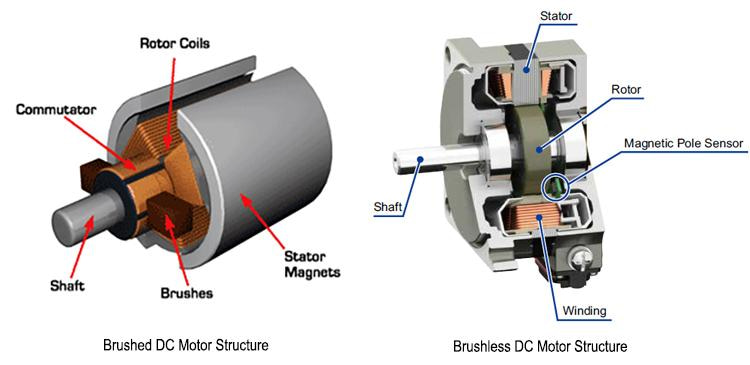
Brushed motors have been around for over a century. They rely on brushes and a commutator to transfer electrical current to the rotor (the rotating part). The motor’s armature is connected to a pair of carbon brushes that conduct electricity to the commutator. As the rotor spins, the brushes make contact with the commutator, creating a magnetic field that causes the rotor to rotate.
How Brushed Motors Work
In a brushed motor, the electrical current is supplied to the rotor via the brushes, which are in constant friction with the commutator. This friction generates heat and wear over time. As the motor operates, the brushes slowly degrade, eventually requiring maintenance or replacement.

 Русский
 English
 العربية
 Français
 Español
 Português
 Deutsch
 italiano
 日本語
日本語 한국어
한국어 Nederlands
 Tiếng Việt
 ไทย
ไทย Polski
 Türkçe
 አማርኛ
አማርኛ Bahasa Melayu
 தமிழ்
தமிழ் Filipino
 Bahasa Indonesia
 magyar
 Română
 Čeština
 हिन्दी
 فارسی
فارسی Kiswahili
 Slovenčina
 Slovenščina
 Norsk
Norsk Svenska
 українська
 Ελληνικά
 Suomi
Suomi עברית
עברית Dansk
Dansk বাংলা
বাংলা Hrvatski
 Afrikaans
 Gaeilge
 Eesti keel
 Māori
Māori සිංහල
සිංහල Azərbaycan dili
 Euskara
 Беларуская мова
 Български
 guarani
 Kreyòl ayisyen
 Kurdî
Kurdî Lietuvių
 Македонски
 తెలుగు