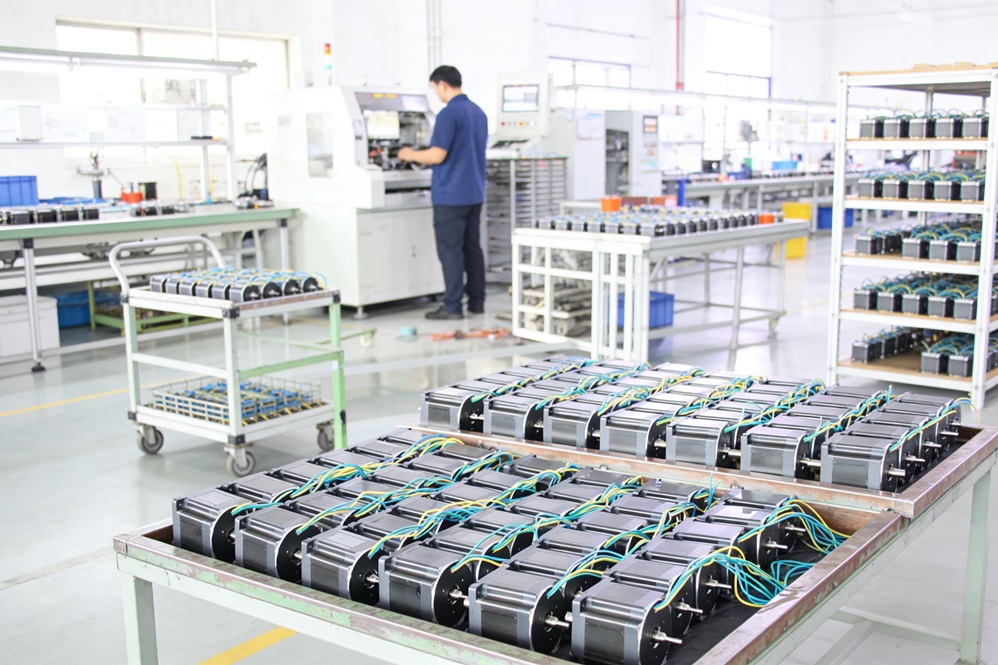
HOLRY Motor: 20 Years of Manufacturing Expertise Explained
As a source factory with over 20 years of deep expertise in motor manufacturing, HOLRY Motor has focused on the R&D, production, and sales of brushless and brushed motors since its inception. We have served thousands of industry clients across home appliances, industrial equipment, new energy, smart equipment, and more. When addressing customer inquiries daily, “Which is better: brushless or brushed motors?” is the most frequently asked question. In reality, there is no absolute ‘better’ in the motor industry—only “more suitable.” Each motor type, with its unique structural and performance advantages, serves distinct application scenarios, supporting the smooth operation of various industries. Today, from HOLRY Motor's manufacturing perspective and drawing on years of technical expertise and customer service experience, we comprehensively analyze the differences between brushless and brushed motors across multiple dimensions—including structural principles, core performance, application scenarios, and cost maintenance—to help you identify the motor type best suited to your needs.
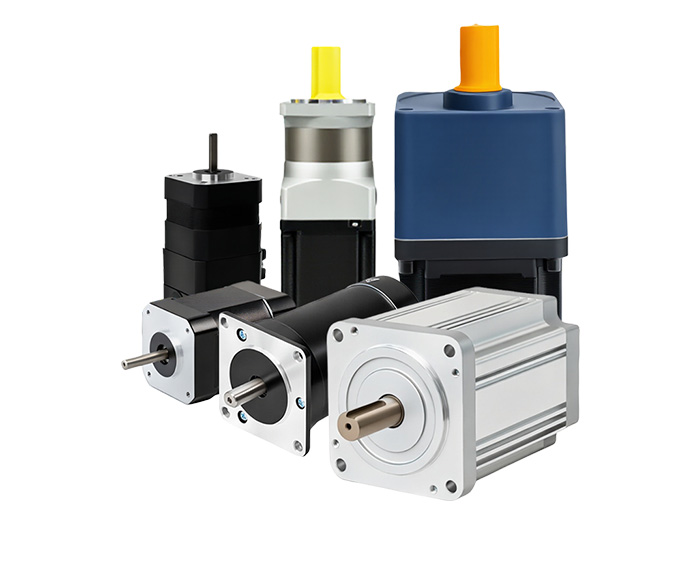
Before diving into the comparison, let's clarify a fundamental concept:
The core distinction between brushless and brushed motors lies in their “commutation method.” This difference is the root cause of all performance and application variations between the two types, and it represents the most critical technical differentiation point in HOLRY Motor's manufacturing process. Simply put, brushed motors rely on mechanical contact for current commutation, while brushless motors achieve contactless commutation through electronic components. Though seemingly a minor difference in commutation method, this distinction directly determines critical performance metrics like lifespan, efficiency, and noise levels, thereby defining their respective application boundaries. Next, we'll dissect these differences across multiple dimensions, using firsthand factory production experience and real-world case studies to provide a more intuitive understanding of their distinctions.
1. Brushed Motors:
Simple structure, relying on mechanical friction for commutation
Brushed motors represent the most fundamental and traditional type in the motor industry, and were one of HOLRY Motor's core product lines during its early years. Their structure is relatively straightforward, primarily consisting of four core components: the stator, rotor, brushes, and commutator. Auxiliary components include bearings, housings, and lead wires. From a manufacturing perspective, brush motors present lower assembly complexity. Core processes center on stator winding fabrication and brush-commutator assembly, making them a foundational category in entry-level motor production.
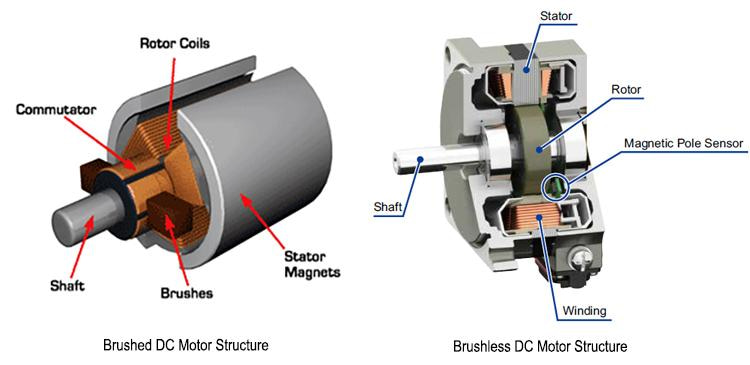
Its operating principle is straightforward:
The stator remains stationary, typically composed of permanent magnets that generate a fixed magnetic field. The rotor, an iron core with wound coils, is connected to the commutator as a single unit and can rotate freely. Brushes, usually made of carbon material and fixed to the motor housing, maintain close contact with the commutator, responsible for transferring external current to the rotor coils. When current flows through the brushes to the commutator and then into the rotor windings, the rotor generates electromagnetic torque under the stator's magnetic field, enabling rotation. The commutator rotates with the rotor, continuously switching the current direction through sustained contact with the brushes to ensure the rotor maintains steady, uninterrupted rotation.
During HOLRY Motor's production process, we discovered that the core advantage of brushed motors lies in their simple structure—the winding, assembly, and testing processes are relatively straightforward, requiring no complex electronic control modules. This simplicity is key to maintaining long-term cost advantages. However, the mechanical commutation characteristic also introduces inherent limitations: the continuous friction between brushes and commutator not only causes wear but also generates sparks and noise. These are critical details we focus on controlling during production. For instance, we optimize brush materials (such as using high-purity carbon brushes) to reduce wear and sparking, thereby enhancing motor stability.
2. Brushless Motors:
Technological Advancement Enables Contactless Operation Through Electronic Commutation
Brushless motors represent a new generation of electric motors emerging alongside electronic technology advancements. They constitute a key product line that HOLRY Motor has prioritized for R&D and promotion in recent years, now widely adopted in mid-to-high-end equipment applications. Compared to brushed motors, the most significant change in brushless motors is the elimination of brushes and commutators. Their core structure comprises four major components: stator, rotor, Hall sensors, and electronic controller (driver). While structurally more complex, they offer superior performance.
The working principle of brushless motors achieves a breakthrough in “contactless commutation”: The stator consists of an iron core with wound three-phase windings, fixed to the motor housing; The rotor consists of permanent magnets that rotate freely. Hall sensors mounted on the stator continuously detect the rotor's position and transmit signals to the electronic controller. Acting as the motor's “brain,” the controller precisely regulates the energization sequence and current intensity of the stator windings upon receiving Hall sensor signals, thereby generating a rotating magnetic field that drives continuous rotor rotation.
From HOLRY Motor's production process perspective, brushless motor manufacturing is significantly more challenging than brushed motors—stator winding precision demands higher accuracy (ensuring symmetry of the three-phase windings), Hall sensor positioning requires extreme precision (with tolerances under 0.1mm), and electronic controller debugging necessitates specialized technicians. Core processes include stator winding, rotor magnetization, sensor calibration, and controller matching. While this complex production process increases manufacturing costs, it delivers superior performance characteristics such as frictionless operation, spark-free performance, and low noise. These advantages are the core reasons brushless motors have replaced brushed motors as the mainstream choice in mid-to-high-end applications.
It is particularly noteworthy that HOLRY Motor employs Field-Oriented Control (FOC) principles in its brushless motor development. Through PWM modulation technology, the stator magnetic field rotation speed is precisely controlled to maintain an optimal 90° angle with the rotor at all times. This ensures the motor retains linear output characteristics even during high-speed operation. This represents one of our key technological advantages, enabling our brushless motors to outperform competitors in both efficiency and stability.
Core Performance Comparison: Real-World Production Data Reveals Strengths and Weaknesses
As a manufacturer, HOLRY Motor conducts thousands of real-world tests annually on the core performance of both motor types, covering multiple dimensions including lifespan, efficiency, noise levels, rotational speed, torque, and maintenance costs. These empirical data directly reflect the applicable scenarios for each motor type. Below is our core performance comparison, compiled from production testing and industry standards. We let the most authentic data speak for itself, helping you clearly distinguish their respective strengths and weaknesses.
1. Lifespan: Brushless Motors Outperform Brushed Motors with Outstanding Maintenance-Free Advantage
Lifespan is one of the most critical differences between the two motors and a key concern for customers during inquiries. Based on HOLRY Motor's production testing and customer feedback, the lifespan gap between the two is very pronounced:
The lifespan of brushed motors is primarily limited by brush wear. Brushes are consumables that degrade continuously during operation. Once worn beyond a certain point, they must be replaced; otherwise, the motor may malfunction or even damage the commutator. Our testing indicates that standard brushed motors have brush lifespans ranging from 500 to 2000 hours, depending on operating conditions and load intensity: in high-temperature, high-load environments, brush wear accelerates, potentially reducing lifespan to under 500 hours; under light loads and normal temperatures, lifespan can reach approximately 2000 hours. Additionally, the commutator wears down due to brush friction. Prolonged use causes surface oxidation and grooving, further shortening motor lifespan.
Brushless motors eliminate wear entirely—by removing brushes and commutators, they avoid mechanical friction loss. Their lifespan primarily depends on bearing and permanent magnet degradation rates. Based on HOLRY Motor's actual testing, the normal service life of brushless motors can reach 10,000 to 50,000 hours, which is 5 to 25 times longer than that of brushed motors. Moreover, brushless motors have virtually no wear-prone components during operation and do not require regular brush replacement, essentially achieving “maintenance-free” operation. This is the core reason why many mid-to-high-end devices choose brushless motors.
Consider this real-world example:
For a home appliance manufacturer, we supplied brushed motors for low-end electric fans. The customer reported an average lifespan of just 1-2 years, necessitating annual bulk replacements of motors or brushes. In contrast, the brushless motors we produced for their high-end fan series achieved a lifespan of 8-10 years without any maintenance, significantly reducing the customer's after-sales costs and maintenance workload.
2. Efficiency and Energy Consumption: Brushless motors are more energy-efficient and suitable for high-demand scenarios.
Motor efficiency directly impacts energy consumption and operating costs, particularly in industrial equipment and new energy products requiring long-term continuous operation. Efficiency differences can lead to significant cost variations. HOLRY Motor's testing reveals that the efficiency gap between the two motor types primarily stems from differing energy losses:
Brush motors suffer energy losses primarily from three sources: friction losses between brushes and commutators, contact resistance losses during current flow through brushes, and thermal losses from mechanical friction. These losses result in relatively low efficiency for brush motors. Standard brush motors typically achieve 70%-85% efficiency, and even our optimized high-end brush motors from HOLRY Motor can only reach around 85% efficiency. This implies that 15%-30% of the electrical energy input to a brushed motor is lost, converted into heat and noise. This not only wastes energy but also causes the motor to overheat, shortening its service life.
Brushless motors, lacking the friction losses from brushes and commutators, primarily experience energy loss through copper losses in the stator windings and iron losses in the core. These losses are relatively minor, resulting in efficiencies generally ranging from 85% to 95%. OurHOLRY Motorhigh-efficiency brushless motors achieve efficiencies exceeding 95%. This means brushless motors convert more electrical energy into mechanical energy with lower energy consumption, delivering significant energy savings in long-term continuous operation scenarios.
For instance, the brushless motors we supply to a new energy electric vehicle manufacturer save 1-2 kWh of electricity per 100 kilometers compared to brushed motors of equivalent power. Assuming an annual mileage of 10,000 kilometers, this translates to annual savings of 100-200 kWh, significantly reducing long-term operational costs for customers. Additionally, brushless motors generate less heat and operate at relatively lower temperatures. This not only enhances the motor's stability but also reduces thermal impact on surrounding equipment, making them particularly suitable for enclosed environments.
3. Noise and Vibration: Quieter Operation for Precision Applications
Noise and vibration are critical performance metrics during motor operation, especially in demanding environments like home appliances, medical equipment, and precision instruments where these factors directly impact user experience. HOLRY Motor rigorously controls and tests noise and vibration levels for both motor types during production, with the following results:
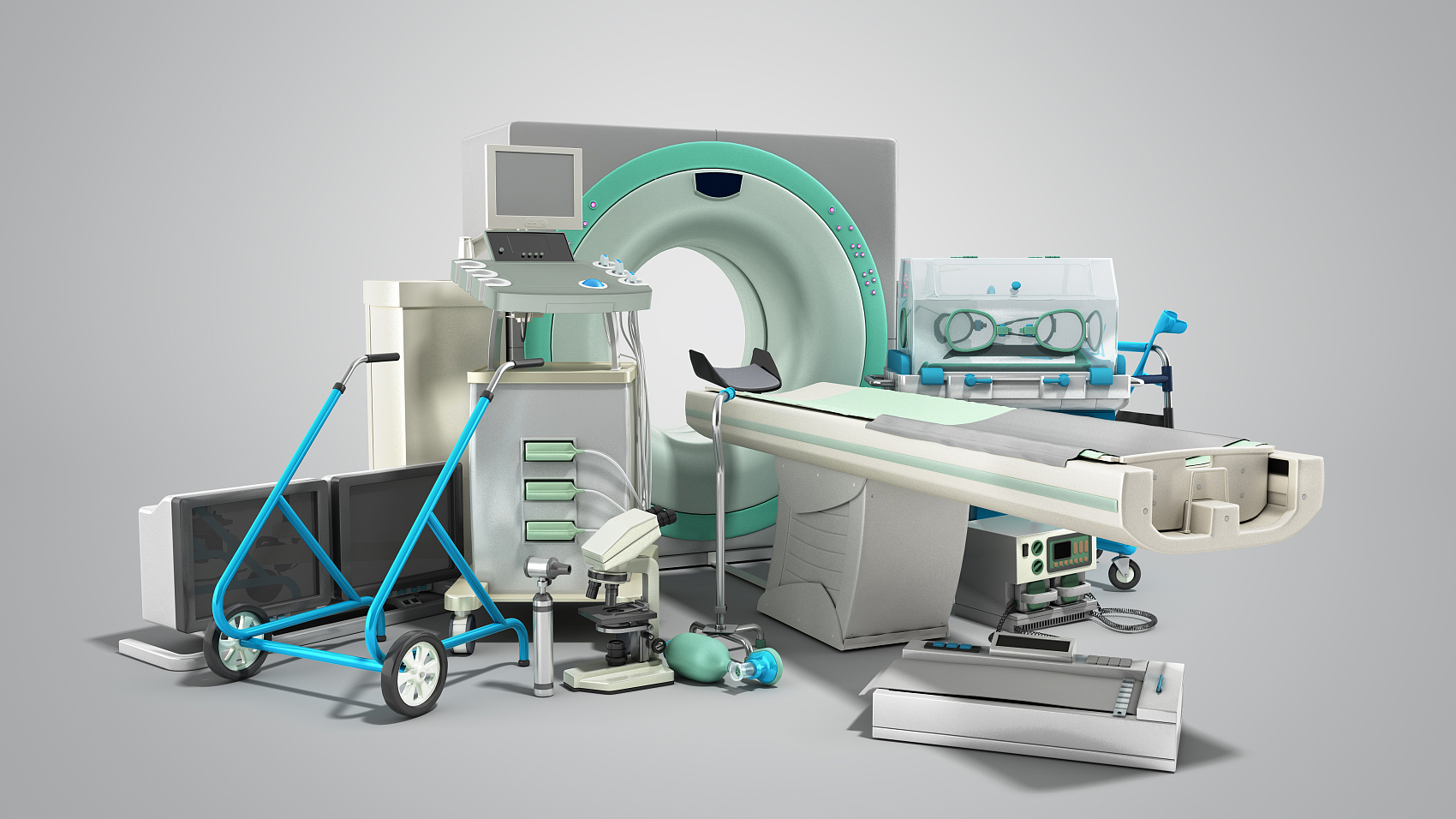
HOLRY Motors for Medical Equipment
HOLRY Brushless Motors for precision instruments
Brush motor noise primarily originates from two sources:
friction noise between brushes and commutators, and electrical spark noise during commutation. This noise exhibits lower frequencies and a distinctly harsh tone. Actual measurements indicate that standard brushed motors operate at noise levels between 60-70dB. Even with noise reduction treatments, it is challenging to reduce noise below 55dB. Additionally, the friction between brushes and commutators generates slight vibrations. Over extended operation, these vibrations gradually intensify, compromising motor stability and potentially transmitting to surrounding equipment, disrupting normal device functionality.
Brushless motors, lacking mechanical friction, primarily generate noise from bearing rotation and airflow. This noise has a higher frequency and sounds softer. Actual measurements show noise levels between 40-55dB. Our HOLRY Motor premium brushless motors, through optimized design, can achieve noise levels below 40dB, making their operation nearly inaudible. Additionally, brushless motors operate more smoothly with minimal vibration, effectively preventing interference with surrounding equipment. This makes them ideal for applications demanding strict noise and vibration control, such as medical devices, precision instruments, and high-end home appliances.
For instance, we produced brushless motors for a medical device company's small diagnostic instruments, which required operational noise below 45dB and vibration amplitude under 0.1mm. By optimizing the bearing structure and adjusting the stator winding distribution, we successfully met the client's specifications. After deployment, the equipment received unanimous approval from both hospitals and patients.
4. Speed and Torque: Each Offers Advantages, Suited for Different Load Requirements
Speed and torque are the core power metrics of a motor, directly determining its applicable scenarios.
Drawing on years of production experience and customer feedback, HOLRY Motor has found that both motor types possess distinct advantages in speed and torque. There is no absolute superiority; the key lies in matching different load requirements:
Brushed motors excel in high low-speed torque and superior starting performance—they deliver substantial torque at low speeds with minimal starting impact. Speed adjustment is relatively straightforward, achievable through voltage regulation for stepless speed control and user-friendly operation. These characteristics make brushed motors ideal for low-speed, high-load applications such as power tools, small cranes, and older electric vehicles. Based on our actual testing, standard brushed motors operate within a speed range of 0-3000 rpm, delivering torque at low speeds that reaches 1.2 to 1.5 times that of brushless motors of equivalent power.
Brushless motors excel in high-speed performance and offer a broader speed range. Without the friction limitations of brushes and commutators, they can achieve significantly higher speeds. Standard brushless motors typically operate between 0-10,000 rpm. Our HOLRY Motor high-speed brushless motors can exceed 20,000 rpm while maintaining superior stability at high speeds, eliminating the sparking and increased noise issues common in brushed motors. Additionally, brushless motors deliver smoother torque output with minimal decay at high speeds, making them ideal for high-speed, light-load applications demanding precise speed control—such as drones, high-speed fans, and precision machine tools.
It's worth noting that HOLRY Motor can customize the speed and torque of both motor types to meet specific client requirements—for instance, optimizing the winding method for brushed motors to enhance high-speed performance, or adjusting the permanent magnet material for brushless motors to boost low-speed torque. This ensures the motors perfectly align with the client's equipment needs.
5. Cost and Maintenance: Brushed Motors Offer Lower Initial Cost, Brushless Motors Provide Long-Term Savings
Cost and maintenance expenses are critical considerations when selecting motors, particularly for bulk-purchasing enterprises where cost differences directly impact overall budgets. From a production perspective, HOLRY Motor analyzes the cost and maintenance disparities between the two motor types:
In terms of procurement cost, brushed motors hold a clear advantage—their simpler structure, streamlined production process, fewer required components, and absence of electronic controllers typically make them 1/2 to 1/3 the cost of equivalent-power brushless motors. For example, a 100W brushed motor costs approximately 50-80 RMB, while a comparable brushless motor costs around 100-200 RMB or more. This cost advantage is the core reason brushed motors dominate low-end equipment and cost-sensitive applications.
In terms of maintenance costs, the advantages of brushless motors are even more pronounced. Brush motors require regular replacement of brushes, and their commutators are prone to wear, necessitating periodic cleaning and maintenance. Over time, this results in higher maintenance expenses. Based on our customer feedback, the annual maintenance cost for a brush motor ranges from 20 to 50 yuan, while brushless motors require virtually no maintenance beyond periodic bearing inspections, making their maintenance costs negligible. For equipment requiring long-term continuous operation, while brushless motors have a higher initial purchase cost, they save substantial maintenance expenses over time, offering superior overall cost-effectiveness.
Additionally, brush motors generate carbon brush wear particles during operation. These particles can contaminate the surrounding environment, particularly in scenarios with strict environmental requirements like precision equipment or medical devices, necessitating additional cleaning costs. Brushless motors produce no pollutants, effectively reducing environmental maintenance expenses.
Application Scenario Analysis: There's No Best, Only Most Suitable
Drawing on HOLRY Motor's 20+ years of production experience and customer cases, we've identified clear boundaries between the application scenarios of brushless and brushed motors. There's no question of one replacing the other; rather, they complement each other to meet the diverse needs of different industries and equipment. Below are the primary application scenarios for both motor types, compiled from actual customer cases for your reference.
1. Core Application Scenarios for Brushed Motors:
Low-cost, low-speed, short-lifespan requirements
Leveraging their low cost, simple structure, and high low-speed torque, brushed motors are primarily used in scenarios with modest performance demands, cost sensitivity, and shorter lifespan requirements—particularly in low-end and disposable devices. Based on HOLRY Motor's customer cases, these applications are concentrated in the following areas:
(1) Low-end home appliances:
Examples include standard electric fans, entry-level electric toothbrushes, compact vacuum cleaners, and toy motors. These devices prioritize procurement cost over motor lifespan and noise levels, making brushed motors an ideal fit. For instance, the brushed motors we produce for a toy manufacturer power remote-controlled toy cars. With low procurement costs and high starting torque, they meet the operational requirements of toy vehicles while achieving a service life matching the typical toy usage cycle (1-2 years), offering exceptional cost-effectiveness.
(2) Power Tools Sector:
Examples include standard hand drills, angle grinders, and hammer drills. These tools require substantial low-speed torque and operate infrequently, with relatively low maintenance costs. The characteristics of brushed motors align well with these requirements. For a power tool manufacturer, we optimized the brush material to enhance wear resistance, achieving a lifespan exceeding 1,000 hours. This meets the needs of general users while keeping procurement costs significantly lower than brushless motors. This helps customers reduce product pricing and boost market competitiveness.
(3) Small Industrial Equipment Sector:
Examples include small conveyor belts, compact water pumps, and electric valves. These devices operate at low speeds under heavy loads with minimal requirements for rotational speed precision. The low-speed torque advantage of brushed motors meets these needs cost-effectively, making them suitable for bulk procurement. For instance, the brushed motors we supply to a small processing plant for conveyor belt drives operate stably with minimal maintenance. Requiring only 1-2 brush replacements annually, they deliver exceptionally low maintenance costs and have earned strong customer approval.
(4) Other Applications:
Examples include older electric vehicles, emergency lighting equipment, and small generators. In these cost-sensitive scenarios with modest performance requirements, brushed motors offer the highest cost-performance ratio.
2. Core Application Scenarios for Brushless Motors:
Mid-to-high-end, high-demand, long-life requirements
Leveraging their advantages of extended lifespan, high efficiency, low noise, and high rotational speeds, brushless motors are primarily deployed in mid-to-high-end scenarios demanding superior performance, extended service life, and stringent environmental conditions—particularly in equipment requiring prolonged continuous operation. Based on HOLRY Motor's customer cases, key application areas include:
(1) High-end home appliances:
Examples include inverter air conditioners, drum washers, premium vacuum cleaners, and air purifiers. These devices demand low noise, low energy consumption, and extended lifespan, where brushless motors significantly enhance user experience. For instance, the brushless motors we produce for a renowned home appliance manufacturer are used in inverter air conditioner compressors. Achieving over 95% efficiency, they save more than 30% energy compared to brushed motors, operate below 40dB noise levels, and offer a lifespan exceeding 10 years. This helps our client elevate their product positioning and market competitiveness.
(2) New Energy Sector:
This includes new energy vehicles like electric cars and hybrids, drones, and energy storage systems. These applications demand exceptional efficiency, longevity, and stability, making brushless motors their core power components. For instance, our brushless motors for a new energy electric vehicle manufacturer utilize high-efficiency permanent magnets and optimized control algorithms. They extend driving range by 20%-30% compared to equivalent-power brushed motors and offer a lifespan exceeding 10 years, meeting the long-term operational needs of electric vehicles.
(3) Industrial Automation Sector:
Examples include precision machine tools, robots, automated production lines, and high-speed fans. These applications demand strict control over rotational speed accuracy, stability, and noise levels. Brushless motors deliver precise speed regulation and consistent torque output. For instance, our brushless motors for a robotics manufacturer drive robotic joints with rotational speed accuracy controlled within ±0.1 rpm and vibration amplitude below 0.05 mm, enabling precise robotic movements and boosting production efficiency.
(4) Medical Equipment Sector:
Examples include small diagnostic instruments, infusion pumps, and ventilators. These devices demand exceptional noise, vibration, and cleanliness standards. Brushless motors' frictionless, dust-free, and low-noise characteristics make them an ideal fit. For instance, our brushless motors for a medical equipment company's infusion pumps operate below 35dB noise levels with smooth torque output. This enables precise infusion rate control, ensuring medical device safety and stability.
(5) Other Applications:
Examples include high-end audio systems, precision instruments, and aviation models. These scenarios demand superior performance and user experience, where brushless motors meet their core requirements.
HOLRY Motor Recommendations: How to Choose the Right Motor for Your Needs?
As a source factory producing both brushless and brushed motors, HOLRY Motor consistently adheres to the principle of “customization based on demand and precise matching.” We recommend the most suitable motor type for each customer based on their specific requirements. Drawing on years of customer service experience, we offer the following selection tips to help you quickly find a motor that meets your needs:
1. Consider Cost Budget:
If your equipment is a low-end product with limited procurement budget and minimal requirements for lifespan, noise, or energy consumption, prioritize brushed motors. Their lower purchase cost effectively controls overall equipment expenses, and their simple maintenance makes them suitable for bulk procurement. If your equipment is mid-to-high-end with ample budget, and you prioritize user experience, longevity, and energy efficiency, opt for brushless motors. Though the initial cost is higher, they save on energy and maintenance expenses over time, enhancing product competitiveness.
2. Consider the Application Scenario:
If your equipment requires low-speed, heavy-load operation—such as power tools or small conveyor belts—choose brushed motors. If your equipment requires high-speed, high-precision operation, such as drones or precision machine tools, prioritize brushless motors. If your equipment requires long-term continuous operation, such as air conditioners or electric vehicles, prioritize brushless motors to reduce maintenance costs and enhance equipment stability. If your equipment has low usage frequency and short lifespan requirements, such as toys or emergency equipment, brush motors are sufficient.
3. Consider environmental requirements:
If your equipment operates in enclosed, clean environments with strict noise requirements—such as medical devices or precision instruments—prioritize brushless motors. Brushless motors feature frictionless operation, produce no dust, generate low noise, cause no environmental pollution, and won't interfere with surrounding equipment. For open, harsh environments like outdoor equipment or industrial sites, consider brushed motors—their simpler structure offers stronger interference resistance and easier maintenance, allowing for quick repairs even when failures occur.
4. Customization Requirements:
For specialized speed, torque, or dimensional specifications, HOLRY Motor offers tailored solutions—whether brushless or brushed motors. We optimize structural designs and adjust performance parameters to ensure seamless integration with your equipment. For example, we once customized a compact brushless motor for a client, measuring just 20mm × 30mm while achieving 15,000 rpm, precisely meeting the requirements for their precision instrumentation.
The Coexistence of Two Motor Types: Adaptability Reigns Supreme
With over two decades in motor manufacturing, HOLRY Motor has witnessed the rise of brushless motors and the enduring resilience of brushed motors. We have come to deeply understand that neither brushless nor brushed motors are inherently “better”—only “more suitable.” Brushed motors, with their low cost and simple structure, remain irreplaceable in low-end equipment and cost-sensitive applications. Brushless motors, leveraging their long lifespan, high efficiency, and low noise, have become the mainstream choice in mid-to-high-end sectors. Together, they complement each other, driving the advancement of the motor industry.
As a source manufacturer, HOLRY Motor steadfastly adheres to the principle of “Quality First, Customization to Order.” Whether producing brushless or brushed motors, we rigorously control every production stage—from raw material procurement and component machining to finished product inspection, packaging, and shipping—ensuring excellence at every step to guarantee product quality and reliability. Our dedicated R&D team continuously optimizes product performance based on industry trends and customer requirements, delivering increasingly competitive motor solutions. Our comprehensive after-sales service system provides timely technical support and maintenance, eliminating customer concerns.
If you're still debating whether brushless or brushed motors are superior, consider reaching out to HOLRY Motor. We'll provide expert advice and customized solutions tailored to your equipment requirements, budget, and application scenarios, ensuring every motor delivers maximum value. Moving forward, HOLRY Motor will continue to deepen our expertise in motor manufacturing, continuously enhancing technical capabilities and product quality. We are committed to supplying superior, highly compatible motor solutions across diverse industries, driving high-quality development throughout the sector.

 Русский
 English
 العربية
 Français
 Español
 Português
 Deutsch
 italiano
 日本語
日本語 한국어
한국어 Nederlands
 Tiếng Việt
 ไทย
ไทย Polski
 Türkçe
 አማርኛ
አማርኛ Bahasa Melayu
 தமிழ்
தமிழ் Filipino
 Bahasa Indonesia
 magyar
 Română
 Čeština
 हिन्दी
 فارسی
فارسی Kiswahili
 Slovenčina
 Slovenščina
 Norsk
Norsk Svenska
 українська
 Ελληνικά
 Suomi
Suomi עברית
עברית Dansk
Dansk বাংলা
বাংলা Hrvatski
 Afrikaans
 Gaeilge
 Eesti keel
 Māori
Māori සිංහල
සිංහල Azərbaycan dili
 Euskara
 Беларуская мова
 Български
 guarani
 Kreyòl ayisyen
 Kurdî
Kurdî Lietuvių
 Македонски
 తెలుగు