When selecting a dc motor for your application, one crucial decision you’ll face is whether to choose a brushed or brushless motor type of motor. This page will guide you through the key factors to consider when deciding between a brushless and brushed motor.
The Evolution of Electric Motors
Electric motors power a wide range of devices in today’s world, from household appliances to high-performance machinery. Among the various types, brushless motors have gained significant popularity due to their efficiency, durability, and high performance. But why is a brushless motor considered better than traditional brushed motors? In this blog post, we will explore the advantages of brushless motors, how they work, and why they outperform their brushed counterparts in many applications.
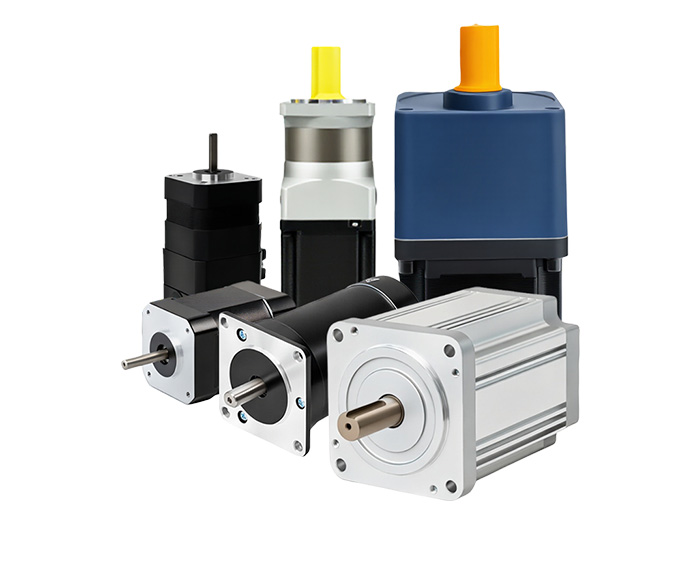
What is a Brushless Motor
The Basic Concept of Brushless Motors
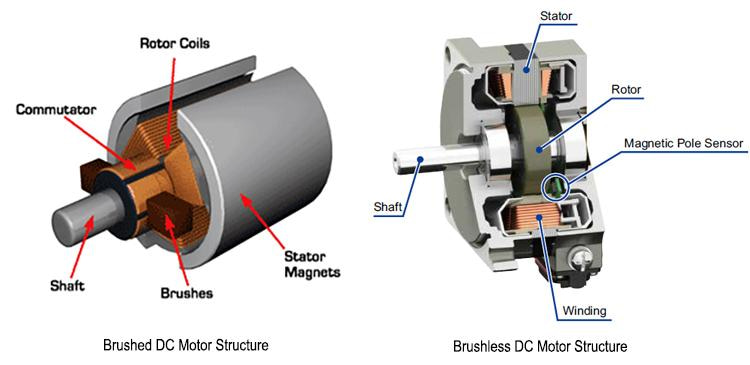
A brushless motor is a type of electric motor that operates without the use of brushes. Unlike traditional brushed motors, where brushes make physical contact with the rotor to transfer electrical power, brushless motors rely on an external electronic controller to switch the current in the windings, which generates the magnetic field that drives the rotor. The rotor itself is typically made of permanent magnets, and the stator is where the windings are located.
How Brushless Motors Work
In a brushless motor, the stator receives power from an electronic controller, which then energizes the windings in a specific sequence. This process creates a rotating magnetic field that interacts with the rotor’s permanent magnets, causing the rotor to spin. The controller adjusts the timing of the current, ensuring smooth and efficient operation.

The Key Advantages of Brushless Motors
Higher Efficiency and Performance
One of the primary reasons why brushless motors are considered superior to brushed motors is their efficiency. Brushless motors have no brushes or commutator to create friction, which results in less energy loss and higher efficiency. This efficiency leads to:
Less heat generation: Less energy wasted as heat means more power can be used for performance.
Better torque-to-weight ratio: Brushless motors deliver higher torque, especially at higher speeds.
Smoother operation: With no brushes making contact, the motor runs more smoothly, reducing vibration and noise.
Longer Lifespan
Brushless motors have a longer lifespan compared to brushed motors. Since there are no brushes to wear out from friction, there’s significantly less physical wear and tear on the motor. This means that brushless motors can run for thousands of hours longer, making them ideal for applications requiring durability and reliability.
In contrast, brushed motors need regular maintenance to replace worn-out brushes, which can be a hassle in the long run.
Brushless Motors vs. Brushed Motors
Efficiency and Power Output
Brushed Motors: Brushed motors are less efficient because the friction between the brushes and the commutator leads to energy loss in the form of heat. As a result, brushed motors tend to lose more power, especially under heavy loads.
Brushless Motors: These motors are more efficient because there’s no friction from brushes. The electronic controller ensures optimal current flow, reducing energy loss and improving overall performance.
Durability and Maintenance
Brushed Motors: Over time, the brushes wear out and need to be replaced. The commutator also degrades, which can reduce the motor’s lifespan and performance. Regular maintenance is required to keep a brushed motor running smoothly.
Brushless Motors: With no brushes to wear out, brushless motors require very little maintenance. Their lack of moving parts that experience wear and tear means they have a longer operational life, making them ideal for applications where reliability is critical.
 Brushed Motors
Applications Where Brushless Motors Excel
Electric Vehicles (EVs)
In the world of electric vehicles, brushless motors are the go-to choice for many manufacturers. Their high efficiency, longevity, and ability to produce more torque at lower speeds make them perfect for EVs, where maximizing battery life and performance is essential. Brushless motors also provide smoother acceleration and deceleration compared to brushed motors.
Drones and Robotics
Drones and robotics rely on brushless motors for their high power-to-weight ratio and precise control. The efficiency and low maintenance of brushless motors allow drones to fly for longer periods and endure more intense workloads without degrading performance. Similarly, in robotics, brushless motors offer precise movements with low noise, contributing to more accurate and reliable machines.
Power Tools and Appliances
Brushless motors are increasingly being used in power tools such as drills, saws, and impact drivers due to their durability, high torque, and long operational life. They are also used in home appliances like washing machines and vacuum cleaners, where energy efficiency and low maintenance are crucial.
Why Brushless Motors Are the Future of Technology
Advancements in Battery Technology
The development of battery technology is a key driver for the future of brushless motors. As batteries become more powerful and energy-dense, the need for efficient, low-maintenance motors will continue to rise. Brushless motors, with their high efficiency and minimal power loss, will be at the forefront of this technological evolution, especially in sectors like electric vehicles and renewable energy.
Environmental Impact and Sustainability
Brushless motors are not only more efficient but also more environmentally friendly. Due to their longer lifespan and lower energy consumption, they contribute to reducing waste and energy use. As the world shifts toward more sustainable technologies, the demand for brushless motors is expected to grow.
The Superiority of Brushless Motors
Brushless motors offer significant advantages over their brushed counterparts, including higher efficiency, longer lifespan, low maintenance, and quieter operation. Whether in electric vehicles, drones, power tools, or consumer electronics, brushless motors outperform brushed motors in nearly every aspect of performance. With the growing demand for more energy-efficient, reliable, and sustainable technologies, brushless motors are undoubtedly the future of electric motor applications.
As technology continues to evolve, it’s clear that brushless motors will play a key role in driving innovation and improving the performance of countless devices. Their benefits make them the go-to choice for industries that prioritize efficiency, longevity, and precision.

 Русский
 English
 العربية
 Français
 Español
 Português
 Deutsch
 italiano
 日本語
日本語 한국어
한국어 Nederlands
 Tiếng Việt
 ไทย
ไทย Polski
 Türkçe
 አማርኛ
አማርኛ Bahasa Melayu
 தமிழ்
தமிழ் Filipino
 Bahasa Indonesia
 magyar
 Română
 Čeština
 हिन्दी
 فارسی
فارسی Kiswahili
 Slovenčina
 Slovenščina
 Norsk
Norsk Svenska
 українська
 Ελληνικά
 Suomi
Suomi עברית
עברית Dansk
Dansk বাংলা
বাংলা Hrvatski
 Afrikaans
 Gaeilge
 Eesti keel
 Māori
Māori සිංහල
සිංහල Azərbaycan dili
 Euskara
 Беларуская мова
 Български
 guarani
 Kreyòl ayisyen
 Kurdî
Kurdî Lietuvių
 Македонски
 తెలుగు