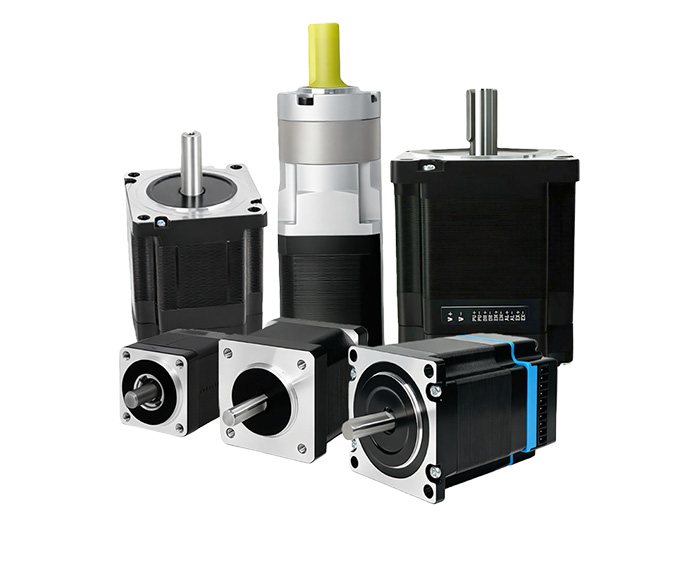
Stepper motors are widely used in CNC machines, 3D printers, robotics, automation equipment, medical devices, and industrial control systems because of their precise positioning and reliable performance. However, like any electromechanical component, a stepper motor can experience failures caused by electrical problems, mechanical wear, improper operation, or incorrect system settings.
A failing stepper motor can reduce equipment accuracy, cause unexpected downtime, and even damage connected components. Understanding the common symptoms of a bad stepper motor helps engineers and technicians identify problems quickly and take effective corrective actions.
This article explains the most common signs of stepper motor failure and provides practical troubleshooting methods.
Unusual Noises During Operation
A healthy stepper motor normally produces a smooth and consistent operating sound. When abnormal noises appear, they often indicate internal or system-related problems.
Grinding Sounds
Grinding noises usually suggest mechanical wear inside the motor. Possible causes include damaged bearings, rotor friction, insufficient lubrication, or contamination entering the motor housing.
If the grinding sound continues, it may increase mechanical resistance and reduce motor efficiency.
Clicking or Tapping Noises
Clicking or tapping sounds are commonly related to:
Incorrect motor current settings
Loose mechanical connections
Step loss caused by excessive load
Driver malfunction
These noises indicate that the motor may not be operating smoothly and should be inspected.
High-Pitched Whining
A high-frequency whining sound is often caused by electrical resonance, incorrect microstepping settings, or unstable driver parameters. Adjusting the driver configuration may help reduce this issue.
Loss of Torque or Power
One of the most noticeable symptoms of a bad stepper motor is reduced torque output. When a motor cannot provide enough force, the machine may fail to complete movements accurately.
Key signs of torque or power loss include:
Motor stalls during operation
Reduced acceleration performance
Difficulty moving heavy loads
Increased vibration during movement
Positioning errors
Several issues can lead to this condition:
Overloaded application requirements
Incorrect voltage or current supply
Motor winding damage
Driver problems
Excessive operating temperature
To troubleshoot, technicians should:
Overheating Issues
Stepper motors naturally generate heat during operation, but excessive temperature is a warning sign of possible failure.
Common Signs of Overheating
Causes of Stepper Motor Overheating
Common causes include:
Excessive current from the driver
Poor ventilation
Continuous operation under heavy load
Incorrect motor selection
Mechanical resistance
Troubleshooting and Fixes
Technicians can solve overheating problems by:
Adjusting driver current settings
Improving cooling conditions
Reducing unnecessary load
Selecting a properly rated motor
Long-Term Impact of Overheating
Continuous overheating can damage motor insulation, reduce winding lifespan, and eventually cause permanent motor failure.
Inconsistent or Jerky Motion
A properly functioning stepper motor should provide smooth and predictable movement. Irregular motion often indicates system instability.
Common Symptoms of Jerky Motion
Possible Causes
1). Electrical Problems
Electrical issues such as unstable power supply, incorrect current settings, or damaged wiring can interrupt motor operation.
2). Mechanical Issues
Mechanical resistance, misalignment, excessive friction, or damaged transmission components may prevent smooth movement.
3). Driver and Control Settings
Incorrect acceleration parameters, pulse frequency, or microstepping settings may cause unstable motion.
Troubleshooting Steps
Ignoring these problems may reduce equipment accuracy and shorten motor life.
Frequent Step Losses
Stepper motors rely on precise electrical pulses to achieve accurate positioning. When the motor cannot follow these commands, step loss occurs.
Signs of Step Loss
Common Causes of Step Loss
1). Electrical Issues
Low voltage, insufficient current, or unstable signals can prevent proper motor operation.
2). Mechanical Causes
High loads, sudden acceleration, or mechanical blockage may exceed the motor's torque capability.
3). Driver or Control Problems
Incorrect driver settings or controller parameters may cause missed steps.
Troubleshooting and Solutions
Ignoring step loss can lead to serious production errors.
Motor Does Not Start or Fails Intermittently
A stepper motor that does not start or randomly stops usually has electrical, mechanical, or control-related problems.
Symptoms of Starting or Intermittent Failures
Common Causes
1). Electrical Faults
Possible problems include:
Broken wires
Damaged windings
Poor power connection
2). Mechanical Issues
A blocked mechanism, damaged bearing, or excessive load may prevent startup.
3). Control or System Errors
Incorrect signals from the controller or driver can interrupt motor operation.
Troubleshooting and Solutions
Inspect the complete system, including power supply, wiring, driver, and mechanical structure.
Excessive Vibration or Resonance
Excessive vibration is another common indication of stepper motor problems.
Signs of Excessive Vibration or Resonance
Common Causes
1). Mechanical Imbalance
Incorrect installation, loose components, or poor alignment may create vibration.
2). Electrical or Control Issues
Improper current settings, speed ranges, or control parameters can cause resonance.
3). Installation Factors
Incorrect mounting or insufficient support may affect motor stability.
Troubleshooting and Solutions
Check mounting conditions, adjust driver settings, and optimize operating speed.
Electrical Irregularities
Electrical failures are among the most serious stepper motor problems.
Common Symptoms of Electrical Problems
Causes of Electrical Irregularities
1). Damaged Windings
Overcurrent or overheating can damage internal coils.
2). Faulty Motor Driver or Controller
A defective driver may provide incorrect signals or excessive current.
3). Poor Wiring Connections
Loose connectors can interrupt power transmission.
4). Power Supply Instability
Voltage fluctuations may affect motor performance.
Troubleshooting and Solutions
Test resistance values, inspect wiring, and verify power stability.
Physical Damage and Wear
Mechanical damage can significantly affect stepper motor performance.
Common Signs of Physical Damage
Damaged housing
Shaft deformation
Bearing noise
Excessive play
Causes of Physical Wear
Troubleshooting and Maintenance
Regular inspection, proper installation, and preventive maintenance can extend motor service life.
Troubleshooting a Bad Stepper Motor
When a stepper motor shows abnormal symptoms, follow these troubleshooting steps:
1. Inspect Wiring and Connections
Check all cables, terminals, and connectors for damage or looseness.
2. Test Motor Windings
Measure winding resistance to identify possible coil damage.
3. Evaluate the Motor Driver
Verify driver current, voltage, and configuration settings.
4. Inspect Mechanical Components
Check bearings, couplings, and moving parts.
5. Monitor Temperature
Measure operating temperature to identify overheating issues.
6. Test with Reduced Load
Run the motor under lighter conditions to determine whether load is the problem.
7. Evaluate for Electrical Irregularities
Check power supply stability and control signals.
8. Document Findings and Take Action
Record test results and decide whether repair or replacement is required.
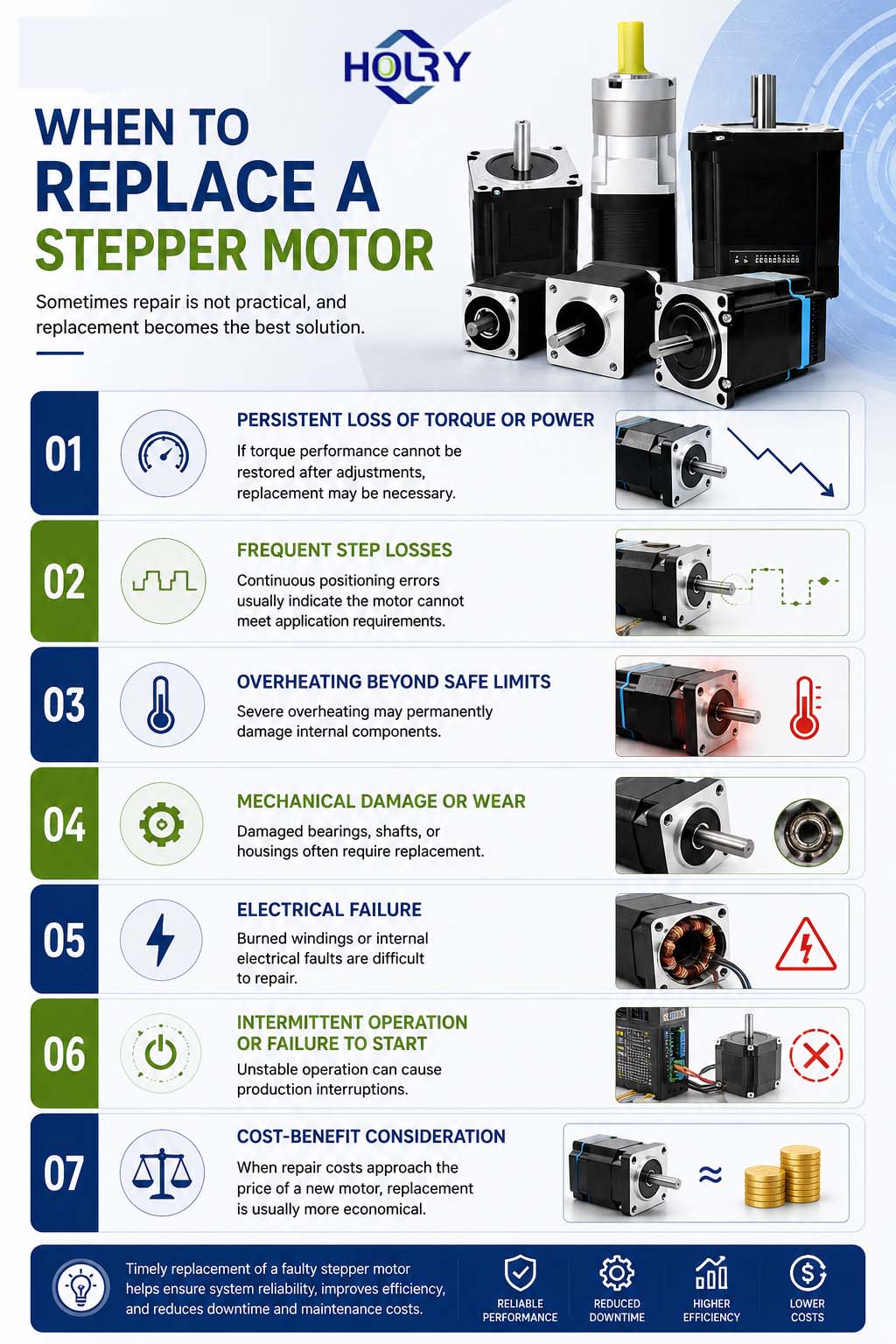
When to Replace a Stepper Motor
Sometimes repair is not practical, and replacement becomes the best solution.
1. Persistent Loss of Torque or Power
If torque performance cannot be restored after adjustments, replacement may be necessary.
2. Frequent Step Losses
Continuous positioning errors usually indicate the motor cannot meet application requirements.
3. Overheating Beyond Safe Limits
Severe overheating may permanently damage internal components.
4. Mechanical Damage or Wear
Damaged bearings, shafts, or housings often require replacement.
5. Electrical Failure
Burned windings or internal electrical faults are difficult to repair.
6. Intermittent Operation or Failure to Start
Unstable operation can cause production interruptions.
7. Cost-Benefit Consideration
When repair costs approach the price of a new motor, replacement is usually more economical.
Best Practices for Replacement
Choose a stepper motor that matches:
Required torque
Operating voltage
Speed requirements
Load conditions
Application environment
Recognizing the symptoms of a bad stepper motor helps prevent unexpected equipment failures and costly downtime. Common warning signs include unusual noises, torque loss, overheating, vibration, step loss, electrical problems, and physical damage.
Regular inspection, correct driver configuration, and proper maintenance can significantly extend stepper motor service life. When replacement is necessary, selecting a reliable stepper motor manufacturer and the correct motor specification is essential for achieving stable and accurate performance in industrial applications.

 Русский
 English
 العربية
 Français
 Español
 Português
 Deutsch
 italiano
 日本語
日本語 한국어
한국어 Nederlands
 Tiếng Việt
 ไทย
ไทย Polski
 Türkçe
 አማርኛ
አማርኛ Bahasa Melayu
 தமிழ்
தமிழ் Filipino
 Bahasa Indonesia
 magyar
 Română
 Čeština
 हिन्दी
 فارسی
فارسی Kiswahili
 Slovenčina
 Slovenščina
 Norsk
Norsk Svenska
 українська
 Ελληνικά
 Suomi
Suomi עברית
עברית Dansk
Dansk বাংলা
বাংলা Hrvatski
 Afrikaans
 Gaeilge
 Eesti keel
 Māori
Māori සිංහල
සිංහල Azərbaycan dili
 Euskara
 Беларуская мова
 Български
 guarani
 Kreyòl ayisyen
 Kurdî
Kurdî Lietuvių
 Македонски
 తెలుగు